
Table of Contents
Chapter 7 Bankruptcy Attorney in New Hampshire: What You Need to Know
When searching for a Chapter 7 bankruptcy attorney in New Hampshire, you expect an explanation of Chapter 7 and the hiring of counsel.
Our firm has been helping New Hampshire and Massachusetts families and businesses for over 25 years with financially related decisions.
Financial distress can become unmanageable and the first step toward Chapter 7 relief is recognizing it.
Recognizing Financial Distress That May Require Chapter 7 Relief
When familiarity with Chapter 7 turns personal, certain warning signs may indicate that debt has become unmanageable. This may be the case if you have persistent collection calls, wage garnishments, lawsuits, or if you are using credit cards to pay for necessities like rent, utilities, and food. Falling behind on a mortgage or auto loan may raise the risk of foreclosure or repossession.
These circumstances, while distressing, do not by themselves prove that Chapter 7 is the right choice. We understand how stressful financial strain can feel. A New Hampshire bankruptcy attorney can review the full picture, explain New Hampshire bankruptcy exemptions, and clarify whether this relief fits your situation. Recognizing these signs simply points toward informed next steps with experienced counsel.
How a Chapter 7 Bankruptcy Attorney Manages Your Case
After financial trouble becomes evident, the relevant question is what a seasoned bankruptcy lawyer will do in a case. Our business is keeping you in business. We have attorneys in New Hampshire and Massachusetts who will take you through the process step by step.
To evaluate Chapter 7, we determine eligibility by completing a means test and reviewing your income, assets, debts and recent transfers. We obtain pay stubs, tax returns, bank and other statements and financial records, and property documents. We prepare and file the bankruptcy petition and the accompanying schedules. The filing of the petition creates the automatic stay which stops creditor collections, garnishments, foreclosures and other proceedings. We take the lead in notifying and working with creditors.
Before the 341 meeting, we prepare clients for the trustee’s questions and attend the meeting to address asset and debt inquiries. In no-asset cases we pursue discharge without liquidation. In asset cases we work with the trustee to protect exempt property and resolve claims. We keep clients informed and typically work toward discharge within a few months, without promising any specific result. Understanding this process provides groundwork for weighing Chapter 7 or Chapter 13 for your financial goals.
Choosing the Right Path: Chapter 7 vs. Chapter 13 Bankruptcy
While we handle the mechanics of bankruptcy, the first big decision is which chapter to file. No single chapter works for every financial situation. Considerations include the debtor’s income and debt, as well as the debtor’s assets.
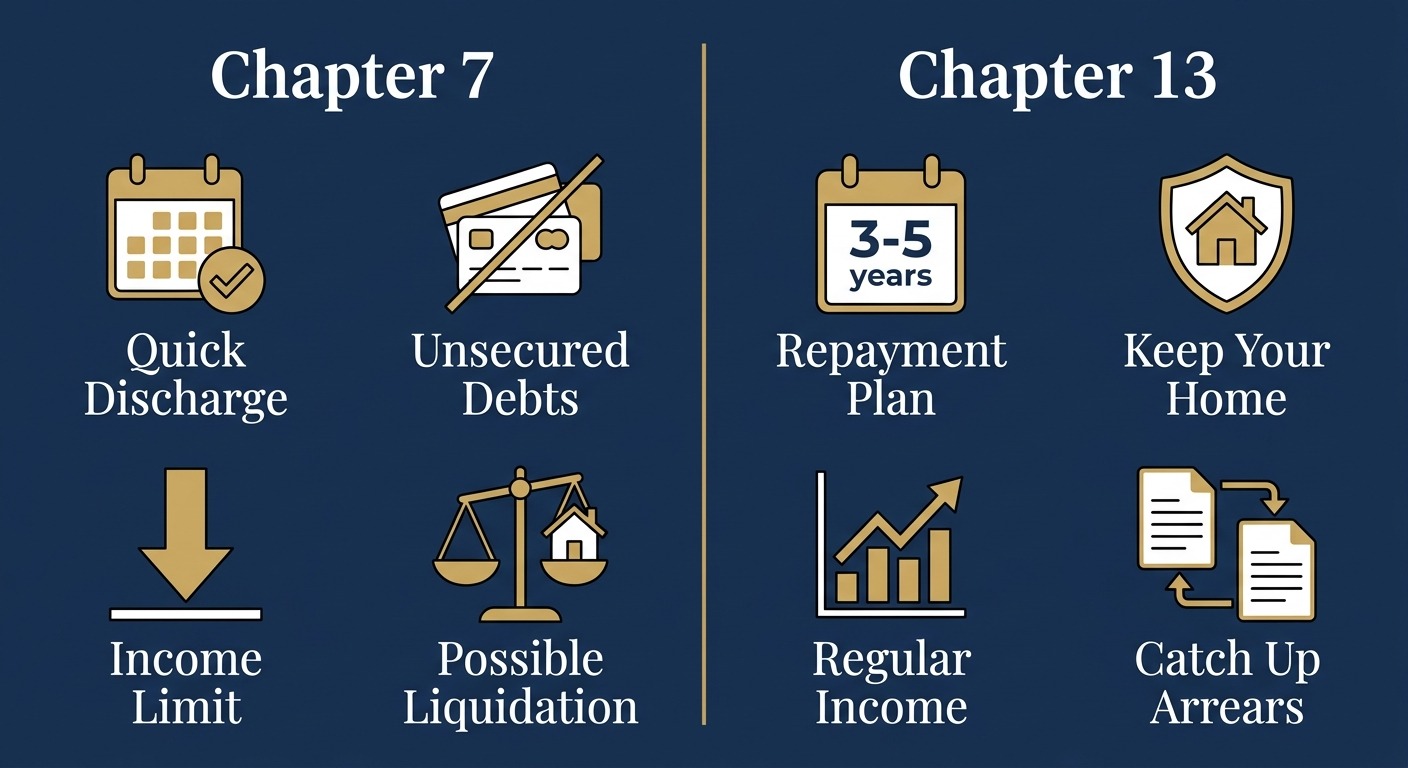
In a typical situation, a client with limited disposable income who wishes to discharge unsecured debts would file for chapter 7 relief. In a chapter 7 case, nonexempt assets may be liquidated to repay creditors.
A client who wishes to keep his or her home or vehicle, and needs time to pay off past due amounts to prevent loss of the property, may wish to file for chapter 13 relief. Chapter 13 uses a 3 to 5 year court approved repayment plan.
Before making a recommendation, we assess the means test, the exemptions you may use, and your goals. Because New Hampshire and Massachusetts law governs eligibility, the correct chapter may depend on the state in which you file.
How New Hampshire Laws Shape Your Chapter 7 Case
Once a debtor elects to proceed under a Chapter 7, New Hampshire law takes over and governs the next steps in the case. New Hampshire has elected not to follow the Federal bankruptcy exemptions. Therefore debtors in New Hampshire do not have a choice between the Federal and State lists of exemptions and must instead use the state list. Exemptions in a bankruptcy case are the things a debtor is allowed to keep. It is important to understand which exemptions a debtor is allowed to use because exemptions can determine what may be protected in a Chapter 7 case.
Under RSA 511, key categories include the homestead exemption, the motor vehicle exemption, and personal property protections. Because dollar amounts and effective dates can change, we review current figures when we prepare a New Hampshire Chapter 7 filing. We do not rely on older summaries.
The means test and median family income statistics determine the Chapter 7 eligibility of an individual, and often the first hurdle is passing the means test. The U.S. Bankruptcy Court for the District of New Hampshire has local rules that self-prepared petitioners are often unaware exist. New Hampshire rules and how they apply to a debtor’s assets are the type of things a local bankruptcy attorney is trained to analyze.
What to Expect for Chapter 7 Attorney Fees and Case Costs
Costs are often an issue for Chapter 7 clients in New Hampshire. Generally, New Hampshire attorneys charge a flat fee rather than charging an hourly rate.
That attorney fee is separate from the bankruptcy court filing fee and court costs, which are paid in addition. We generally collect the fee before the petition is filed. The flat fee typically covers preparing and filing the petition and attending the 341 meeting of creditors, though complex cases may require additional work.
We believe our fee schedule is fair and reasonable. Massachusetts and New Hampshire clients are invited to schedule a consultation for an exact fee quote.
Timeline for a Chapter 7 Bankruptcy Case in New Hampshire
In New Hampshire, a Chapter 7 case typically takes four to six months from filing to discharge. The automatic stay begins immediately when we file, stopping collection calls, foreclosures, and lawsuits. The meeting of creditors usually occurs 30 to 45 days later, and discharge generally follows four to six months after filing if no complications arise.
What to Expect After Hiring a Chapter 7 Lawyer
Once you hire us, we collect your records and file the petition, which triggers an automatic stay stopping creditor collection. We prepare you for the 341 meeting (usually 30 days after filing), and a discharge in New Hampshire typically follows in four to six months.
Frequently Asked Questions About Chapter 7 Bankruptcy in NH
How long does the Chapter 7 process take in New Hampshire?
An automatic stay is issued when a bankruptcy petition is filed. A discharge typically occurs four to six months after the filing.
Do I qualify for Chapter 7 in New Hampshire?
The means test calculates your average six-month income and compares it to the median in New Hampshire for your household size.
What happens to my property when I file?
A bankruptcy trustee may sell your nonexempt property. Exemptions in New Hampshire, including RSA 511, protect certain property.
What debts are not discharged in Chapter 7, and what should I do first?
Debts that are not dischargeable include recent income taxes, child support and alimony, most student loans, debts from intentional wrongdoing or DUI injuries. Gather your pay stubs, tax returns, and bank statements and contact us for an evaluation of your situation.
Start Your Chapter 7 Journey with Confidence
We provide a confidential consultation with a chapter 7 bankruptcy attorney in New Hampshire